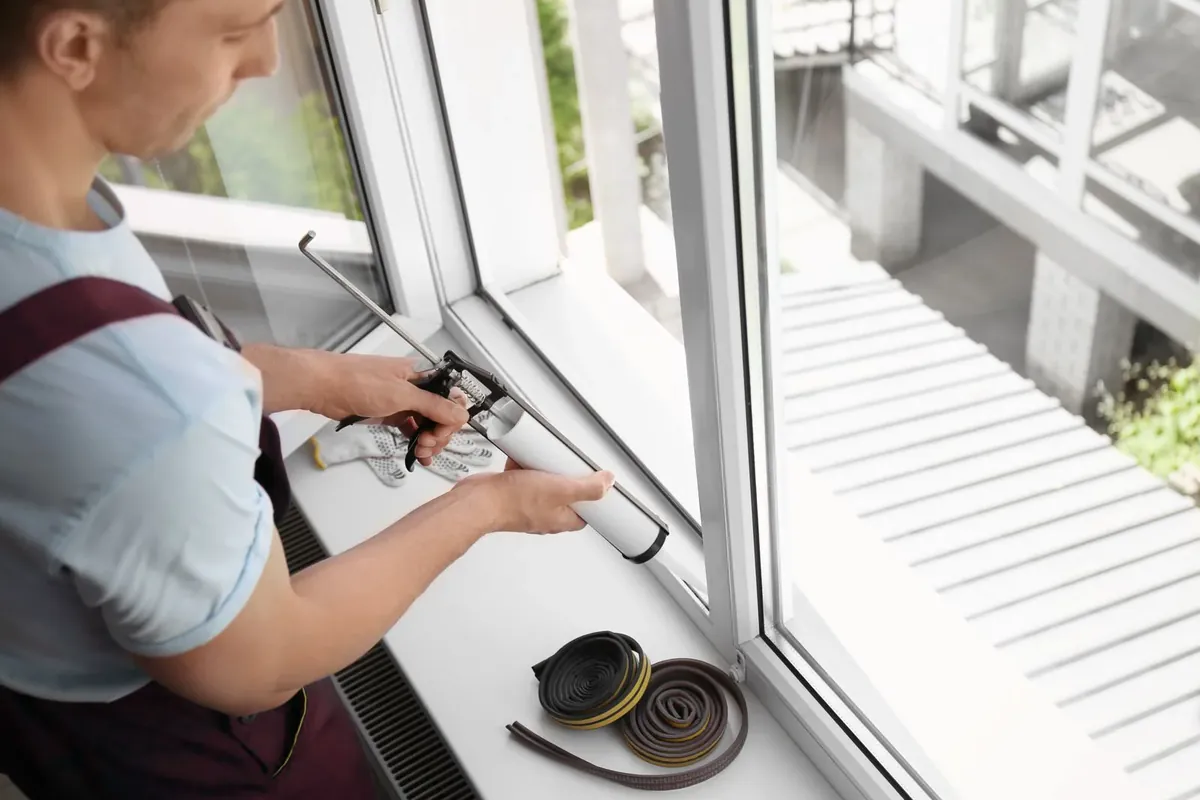
Does Window Sealing Really Lower Heating Bills? When It Does and When It Doesn't
Window sealing can reduce draughts and heat loss, but the bill depends on the whole home. Learn when sealing delivers real savings.
Read More
Tight windows, moisture and stuffy air? We explain when ventilation trickle vents help, what they don't solve, and what to check before fitting one.
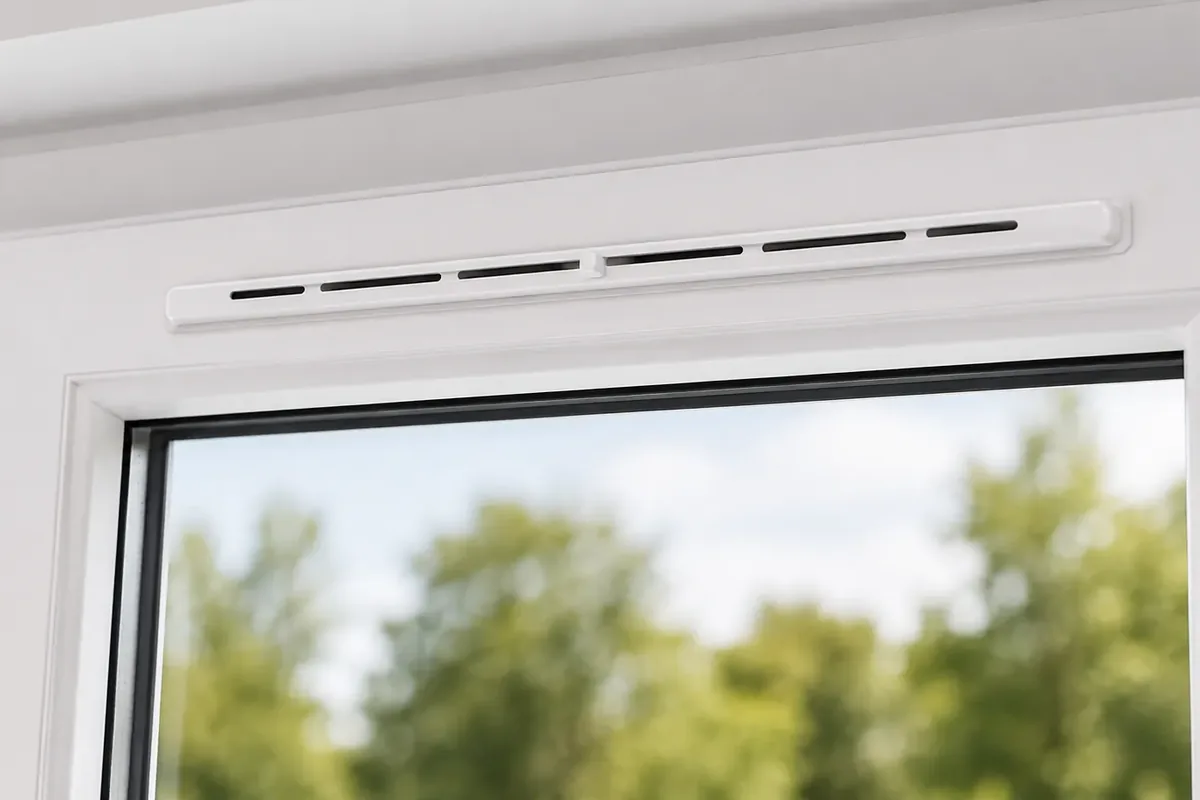
After replacing old windows with tighter ones, more than just the warmth of the home can change. Condensation lingers longer on the glass in the morning, the bedroom air starts to feel stuffy, and after airing out the room the problem comes back a few hours later. It's natural to ask: should trickle vents be fitted to the windows?
A properly chosen plastic window ventilation solution can create a controlled path for fresh air even when the windows are closed. But a trickle vent does not pull moist air out of the home on its own. It only works when air has a clear way to enter, move through the rooms and leave through a working extraction system.
So the key question isn't "are trickle vents a good thing?" The real task is to understand which ventilation system is already in place, where it lacks air, and whether the problem is actually about air exchange — rather than cold glass, a moisture source or a mechanical window fault.
A trickle vent supplies outside air; it does not replace the kitchen, bathroom or general extraction system.
It can be useful when tighter windows have reduced the air that used to leak in through gaps.
Condensation or mould on its own doesn't prove that a trickle vent is needed.
Micro-ventilation and a slightly tilted sash are not the same thing as a purpose-made background ventilation opening.
In a home with a balanced mechanical ventilation system, extra trickle vents must not be fitted without assessing the whole system.
A good solution starts not with a hole in the window profile, but with reviewing the entire air path.
Airtightness protects against uncontrolled air leakage, draughts and unnecessary heat loss. That's why quality window sealing shouldn't be confused with ventilation. A random gap between the sash and the frame is not a "natural trickle vent": its air flow depends on wind, temperature and pressure, so it can't be controlled in any normal way.
Ventilation has a different task — to replace indoor air in a planned way. Outside air needs to enter the living rooms, move through the home and be removed where moisture and odours build up. If one link in this chain is closed off or doesn't work, installing another part won't necessarily give the expected result.
That's why the statement "plastic windows are too airtight" is only half the explanation. The real problem is often that after the windows were replaced, the whole home ventilation picture was never reassessed.
A ventilation trickle vent is a purpose-made air inlet in the window frame, sash or another building element. Depending on the model, the flow can be controlled manually or can adapt to room conditions. What matters is not just the product itself, but its airflow capacity, its position and how it combines with the rest of the ventilation system.
A trickle vent is designed for a steady, relatively small background flow. It does not replace short bursts of intensive airing, which are needed to quickly remove moisture and odours after cooking, showering or renovation work. It's also not a fan: it doesn't actively suck air out of the room.
This explains a common misunderstanding. Fitting a trickle vent can improve the conditions for air exchange, but its mere presence doesn't guarantee that a blocked kitchen or bathroom duct will start pulling, or that a continuously damp wall will dry out.
In a home with either natural or mechanical ventilation, air supply and air removal work as a single loop. If a trickle vent is fitted in the living room but the bathroom fan doesn't work, the exhaust duct is blocked or the air can't reach the extraction point, the result will be modest at best.
Before fitting one, it's worth answering three questions:
Where does outside air currently enter the home?
How does it move from the bedroom or living room into the kitchen and bathroom?
Where and by what route does the used air leave the building?
If one of these questions has no answer, the system needs to be assessed first — rather than blindly choosing how many trickle vents to buy. Sometimes the air supply is missing, sometimes extraction isn't working, and sometimes both are out of balance.
A trickle vent is usually worth considering when there are signs that the home lacks steady, planned air supply, and the extraction path either works or can be fixed.
After replacing old windows with tighter ones. If the earlier windows had many random gaps, replacing them can significantly reduce passive air inflow. In that case the ventilation solution should be reviewed as a whole, rather than trying to recreate draughts through adjustment or by damaging the gaskets.
In bedrooms and living rooms. In a closed room overnight, moisture can build up and the air starts to feel stale. Controlled background air supply can be more useful than a permanently tilted sash — provided the extraction system has somewhere for that air to go.
When opening windows regularly isn't practical. Noise, security, rain or everyday routines can make it hard to air a home by opening windows wide. In such cases, a well-chosen trickle vent can supplement — but not fully replace — intensive airing.
When there's no other suitable air inlet. An air inlet can be fitted not only in a window but also in a wall. The choice depends on the room, façade, noise levels, window construction and the existing ventilation system.
When windows fog up for several reasons at once. As we discuss in the article on why plastic windows fog up, condensation is driven by moisture levels, surface temperature and air exchange. A trickle vent can reduce the risk of fogging if the issue is ventilation-related, but it won't warm up cold glass or remove the moisture source.
When extraction isn't working. A blocked natural draft duct, a broken fan or covered grilles won't be fixed by fitting an air inlet. In that case, the air removal issue needs to be addressed.
When moisture comes from a leak or wet building fabric. A trickle vent is not the answer to a leaking pipe, a non-airtight roof, a damp wall or construction materials that haven't dried out yet. The moisture source has to be dealt with directly.
When the window itself isn't working properly. If the sash catches, won't close, there are random draughts or the hardware is damaged, what's needed first is window service. A trickle vent isn't a workaround for mechanical faults.
When window gaskets get blamed for condensation straight away. Gaskets provide sash airtightness; they don't manage the whole home's air exchange. Replacing them or damaging them must not become a substitute for a proper ventilation solution.
When the home has a balanced mechanical ventilation system with heat recovery. Those systems manage air supply and extraction according to a design. Extra openings in windows can create unplanned air paths, so they must not be installed without consulting the system's designer or maintenance provider.
These methods are not equivalent, even though all of them let outside air into the room.
Ventilation trickle vent. Designed for background air supply. Its capacity and controls are matched to the specific system, so the flow is usually more predictable than through a random gap.
Micro-ventilation or a slightly tilted sash. The air volume is strongly affected by wind and temperature, the window stays not fully closed, and security and sound insulation can be worse. This can be useful as a short-term choice, but it's not automatically the same as an opening designed for continuous background ventilation.
A fully open window. Suitable for quickly exchanging a larger volume of air. This is intensive but short-lived airing, so it addresses a different task than a trickle vent.
Mechanical ventilation system. Fans or a centralised system actively move the air. If heat recovery is used, system airtightness and balanced flows are especially important.
Every time outside air is let in during the heating season, it has to be warmed up. So any promise that a trickle vent "lets in fresh air without losing any heat" would be misleading. The benefit of a trickle vent is not zero losses, but a more controlled air supply — compared to random gaps or a long-tilted window.
Comfort depends on the direction of the airflow, the installation position, outside temperature, wind and the chosen model. An opening that's badly chosen or placed in the wrong spot can cause a noticeable cold draught.
In a noisy location, acoustic performance matters. There are noise-reducing trickle vents and other air inlet solutions, but their choice has to be matched to the required airflow. Simply closing the trickle vent because of noise can throw off the whole ventilation scheme.
Identify the type of system in place: natural draft, mechanical extraction or a balanced system with heat recovery.
Check that the kitchen and bathroom extraction openings aren't covered and that any mechanical fans are working. Natural draft is best assessed over several days, not just a single moment.
Over a few days, track when condensation, odours or stuffiness appear. A hygrometer helps show the moisture trend, but one number isn't a diagnosis.
Assess moisture sources: showers, cooking, drying laundry, lots of people in a small room or construction moisture.
Check that there's an air movement path between rooms, and that closed internal doors don't fully block it.
Evaluate the window profile, sash construction, outdoor noise, wind exposure and installation position. Not every trickle vent can be fitted the same way in every window.
Only after this check can you decide, on sound grounds, whether the home needs a window trickle vent, a wall inlet, a fix to the extraction system — or something else entirely.
A good solution doesn't just reduce fogging on one window. It creates a clear air path through the whole home, doesn't create an unpleasant draught in the occupant zone, doesn't conflict with any existing mechanical system, and is easy for the resident to understand.
After installation, it should be clear how to operate the trickle vent, whether it should be kept open, how to clean it and what signs would mean that the real problem lies elsewhere. If an automatic or humidity-controlled model is chosen, its operating principle must also be explained.
Most importantly, a trickle vent must not be sold as a universal remedy for condensation or mould. It's one element of a ventilation system. In the right place and in a working system it can be very useful; chosen poorly, it's just another opening in the window.
If your windows fog up, your rooms feel stuffy or the air has changed since the windows were replaced, the first step is to review the condition of the windows and the existing ventilation path. Our visit and full window diagnostic are free. After the inspection we'll tell you whether a trickle vent is right for the window, or whether an extraction, airtightness or mechanical issue needs to be fixed first.
Book a free window diagnostic and a technician's consultation.
Window sealing can reduce draughts and heat loss, but the bill depends on the whole home. Learn when sealing delivers real savings.
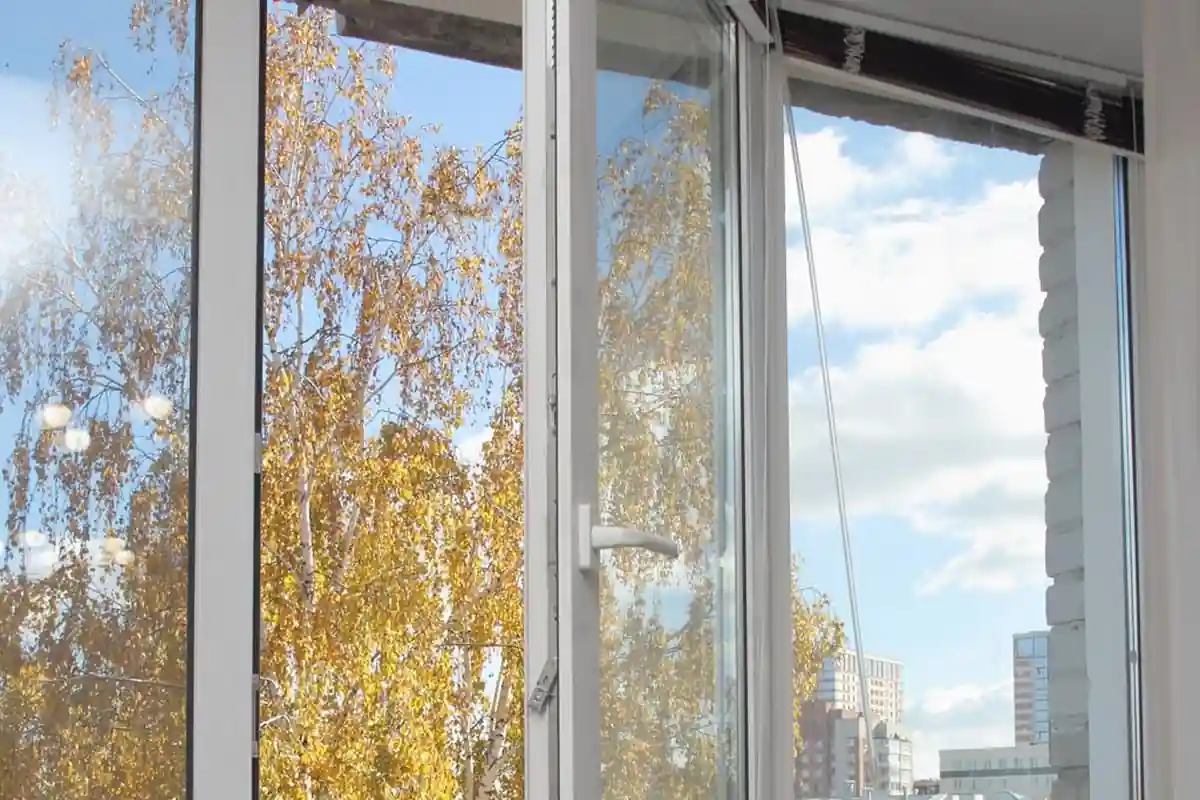
Has your window in Panevėžys started catching as the weather cools? We separate three different situations: sash catching, hardware fault and air leakage.
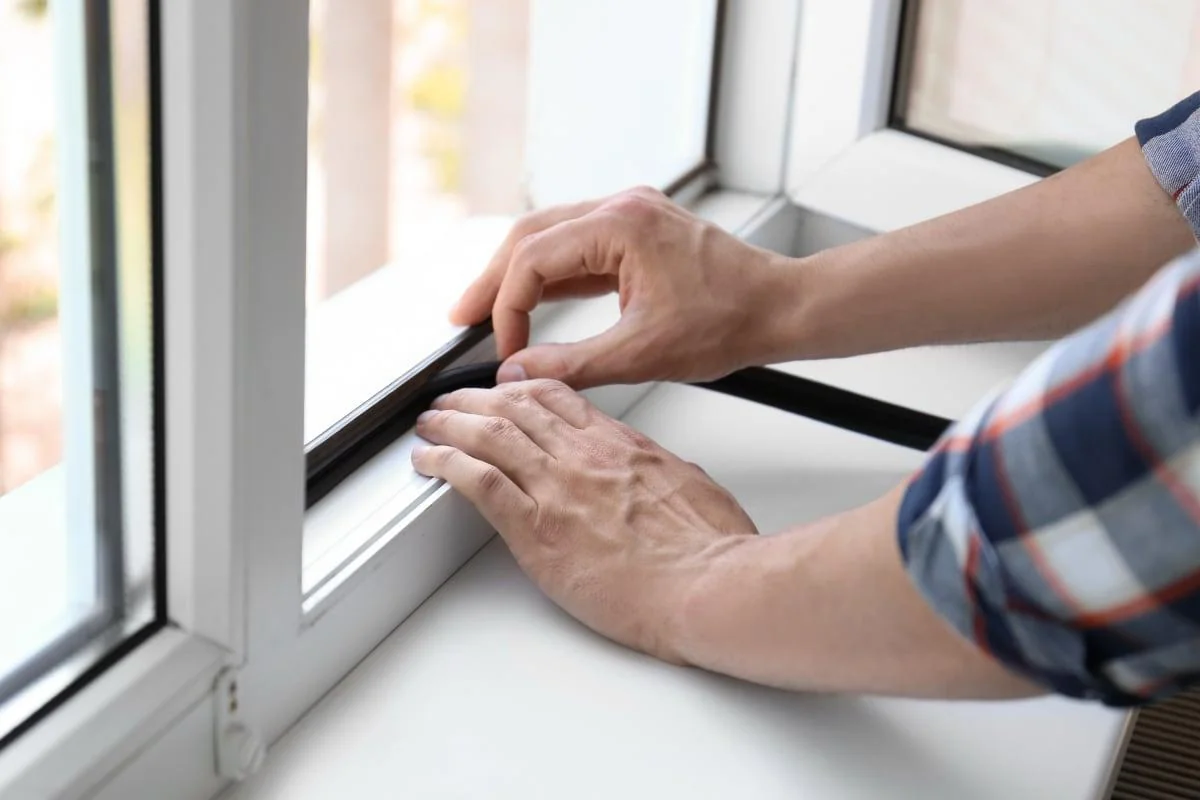
You replaced the gaskets but it still feels cold by the window? Before ordering a second replacement, check four separate sealing points — from the cold-glass sensation to the frame-to-wall joint.
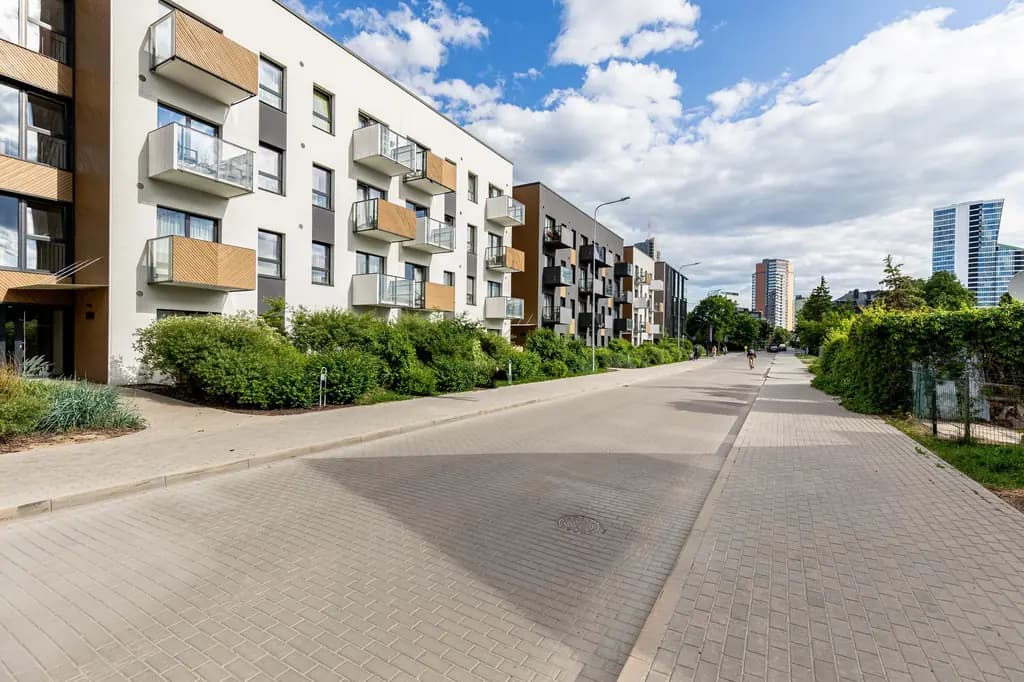
Sash catching or handle harder to turn in a new-build apartment? Before an adjustment or a warranty claim, it is worth documenting five simple facts — reviewed from Vilnius cases.
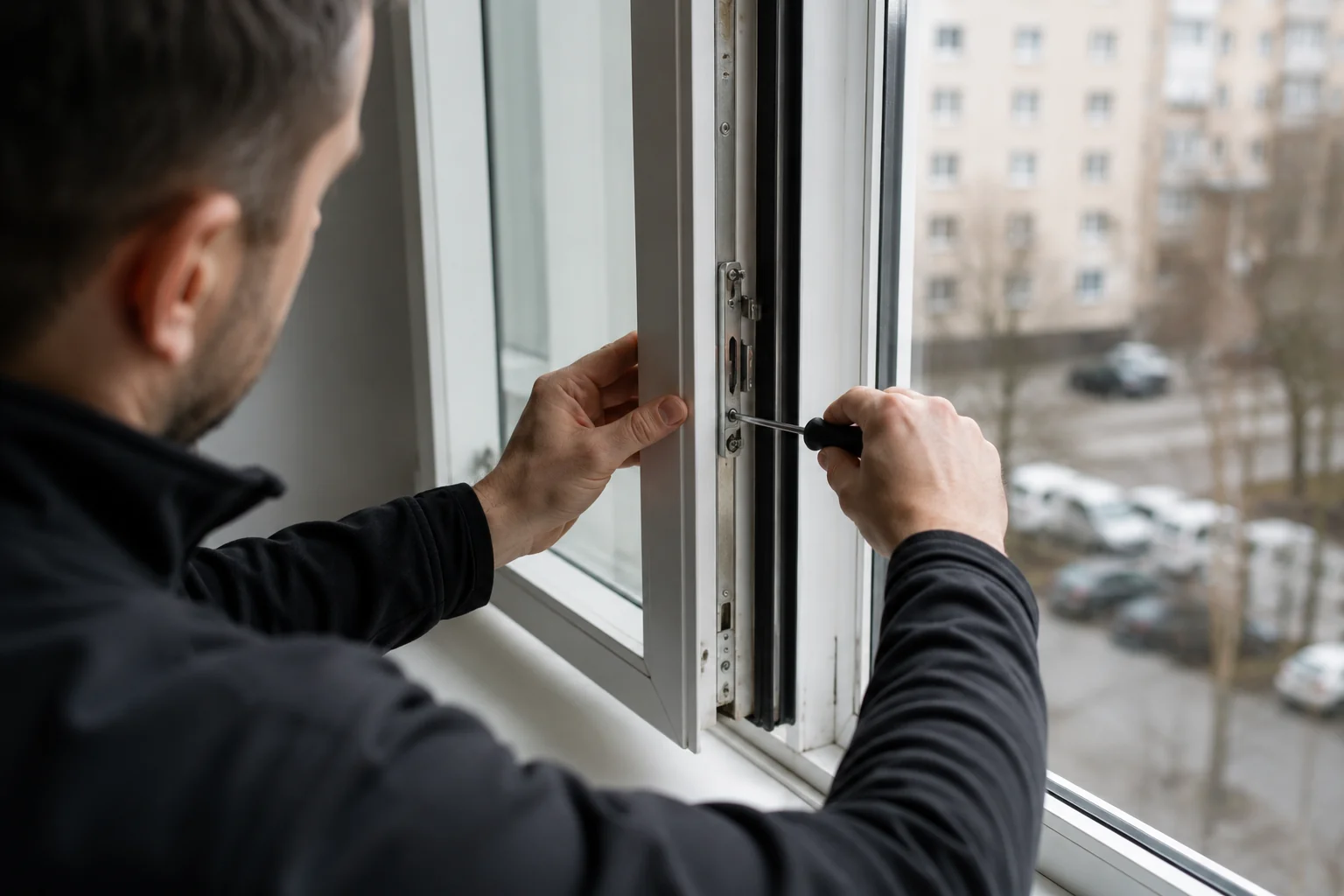
Adjusted the window twice and the draught is back? Adjustment has a limit — when a component is physically worn, no correction will hold for long. How a technician tells when adjustment is enough and when it is time for component replacement.
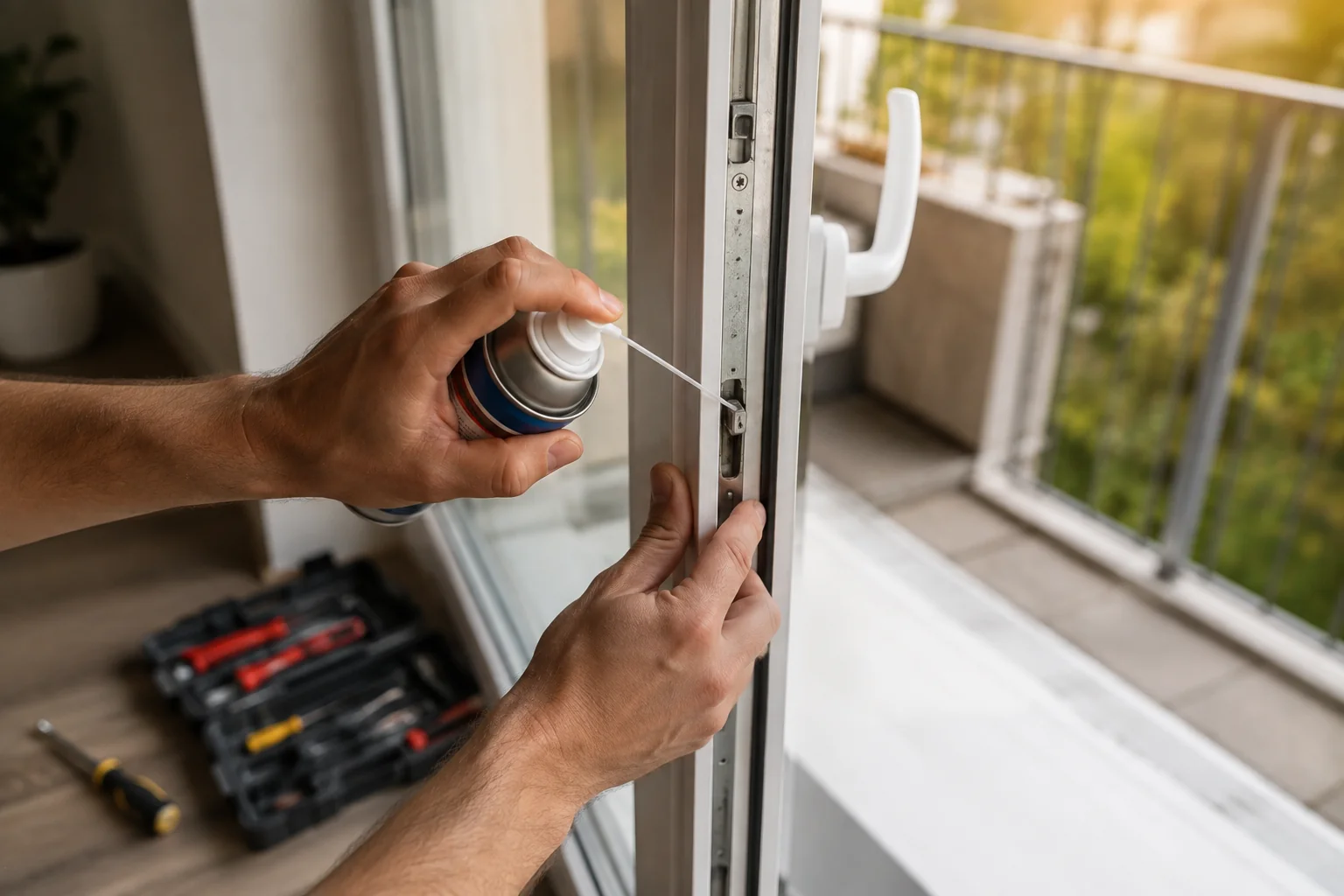
How to maintain plastic balcony doors, what you can safely check yourself and when maintenance alone is no longer enough.
We serve Vilnius, Kaunas, Klaipėda, Panevėžys, Šiauliai and all of Lithuania
Professional reliability you can trust
Quick response when you need it most
Up to 5 years
Competitive prices
Professional solutions for all your window and door needs
Enhance your windows and doors with high-quality components for superior functionality and comfort
We repair plastic and wooden windows and balcony doors throughout Lithuania. Aluminium window repair services are available in Vilnius and Kaunas.
Real feedback from our satisfied customers
"Incredibly professional and fast service. The technician fixed our window in under an hour. Highly recommended!"
"Great communication and transparent pricing. The quality of work was excellent. Very happy with the result."
"The team was punctual, polite, and very knowledgeable. They explained the issue clearly and fixed it efficiently."
"Fantastic service from start to finish. I will definitely use them again for any future window or door repairs."
The advantages of working with our team of professionals
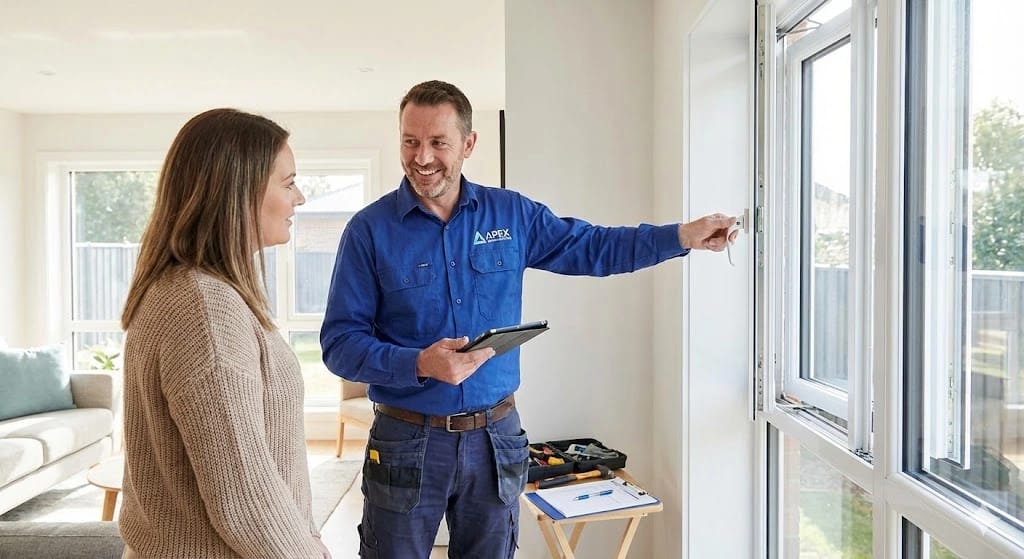
No-cost initial assessment to identify the problem.
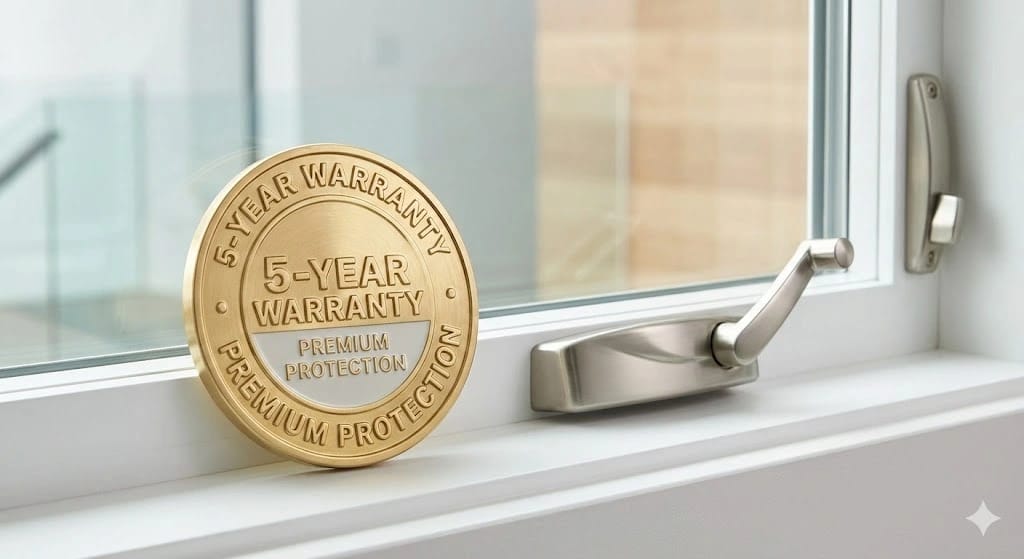
We provide up to a 5-year warranty.
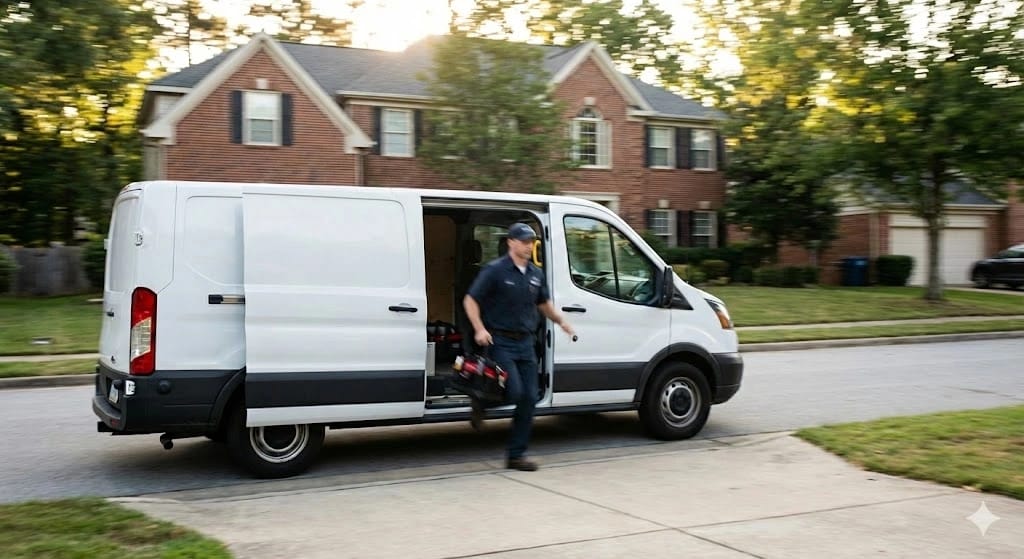
Our technicians arrive promptly to address your needs quickly.
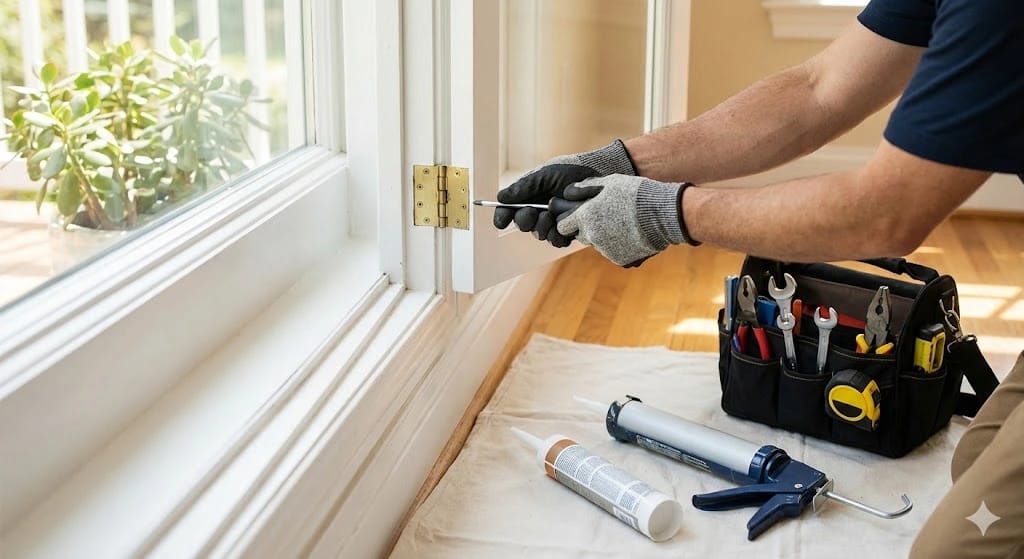
99% of repairs can be completed during the first visit.
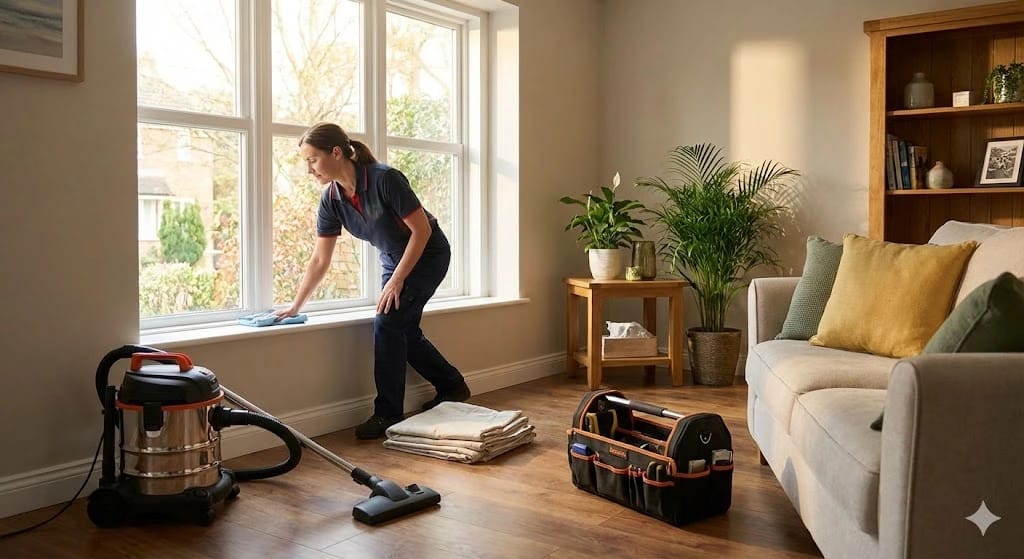
We respect your home and always leave our workspace clean.
We work with all types of window and door profiles and manufacturers.

Pay by card, cash, or we can issue an invoice.

Our goal is your complete satisfaction with our work.
Expert professionals with years of experience
Senior Technician & Team Lead
Coordinates the team and ensures the highest quality of service
Technician-Specialist
Ensures your windows and balcony doors operate smoothly
Technician-Specialist
Ensures your windows and balcony doors operate smoothly
Technician-Specialist
Ensures your windows and balcony doors operate smoothly
Technician-Specialist
Ensures your windows and balcony doors operate smoothly
Technician-Specialist
Ensures your windows and balcony doors operate smoothly
Technician-Specialist
Ensures your windows and balcony doors operate smoothly
Technician-Specialist
Ensures your windows and balcony doors operate smoothly
Technician-Specialist
Ensures your windows and balcony doors operate smoothly
Technician-Specialist
Ensures your windows and balcony doors operate smoothly
Technician-Specialist
Ensures your windows and balcony doors operate smoothly
Technician-Specialist
Ensures your windows and balcony doors operate smoothly
See the quality of our work through real transformations
Replacement of selective double and triple glazing units to improve energy efficiency or remedy glass breakage
Complete mechanism renewal with modern hardware
Sealing the gaps between the window sill and the window frame to reduce heat loss and air leakage
Complete mechanism replacement with modern multi-point locking system
Replacement of old seals with polyurethane foam that remains stable and does not react to temperature changes, whether in winter or summer.
Replacement of worn hinges and adjustment of window and door hardware to ensure smooth operation and a tight seal.
We work in all major cities, their districts and surrounding towns
We provide window repair services across Lithuania – working in all major cities, their districts and surrounding towns. We perform plastic window repair, window fixing, window adjustment, window sealing and gasket replacement, ensuring tightness and long-lasting results.
👉 In about 99% of cases we solve the problem on the first visit, and the technician's call-out and full window diagnostics are free of charge.
We perform window repair in Vilnius throughout the city and Vilnius district – in Antakalnis, Fabijoniškės, Pašilaičiai, Pilaitė, the city centre and other Vilnius districts as well as surrounding towns. We solve sealing, adjustment and mechanical issues, carry out plastic window repair and glass unit replacement. We also provide window adjustment and window sealing.
👉 Most often we handle everything on the first visit, and the call-out and window inspection cost you nothing.
We perform window repair in Kaunas and Kaunas district – working in Šilainiai, Dainava, Eiguliai, Žaliakalnis, the city centre and other districts as well as surrounding towns. We fix leaking, stuck or misaligned windows, carry out plastic window repair and gasket replacement. We also provide window adjustment.
👉 In about 99% of cases we solve the problem on the first visit, and the technician's call-out is free of charge.
In Klaipėda we perform window repair throughout the city and Klaipėda district – both in the city itself and in Gargždai and other surrounding towns. Due to the coastal climate, window sealing and window adjustment are often needed, so we help restore window tightness, eliminate drafts and improve home comfort.
👉 We come out free of charge, assess the situation on site and most often solve the problem right away.
We provide window repair services in Šiauliai and Šiauliai district – working in Dainiai, Gytariai, Lieporiai, the city centre and other districts as well as surrounding towns. We carry out plastic window repair, window adjustment and window sealing, quickly resolving both minor and more complex faults.
👉 Most often we handle everything on the first visit, and the call-out and diagnostics are free of charge.
In Panevėžys we perform window repair throughout the city and Panevėžys district – working in Kniaudiškės, Rožynas, Pilėnai, the city centre and other districts as well as surrounding towns. We carry out plastic window repair, window adjustment and gasket replacement, ensuring quality and long-lasting results.
👉 We come out free of charge and most often solve the problem on the first visit.
Original window parts only from trusted manufacturers — that's why we can offer up to 5 years warranty
Everything you need to know about our window and door repair services


 Window Repair in Vilnius
 Window Repair in Kaunas
 Window Repair in Klaipėda
 Window Repair in Šiauliai
 Window Repair in Panevėžys